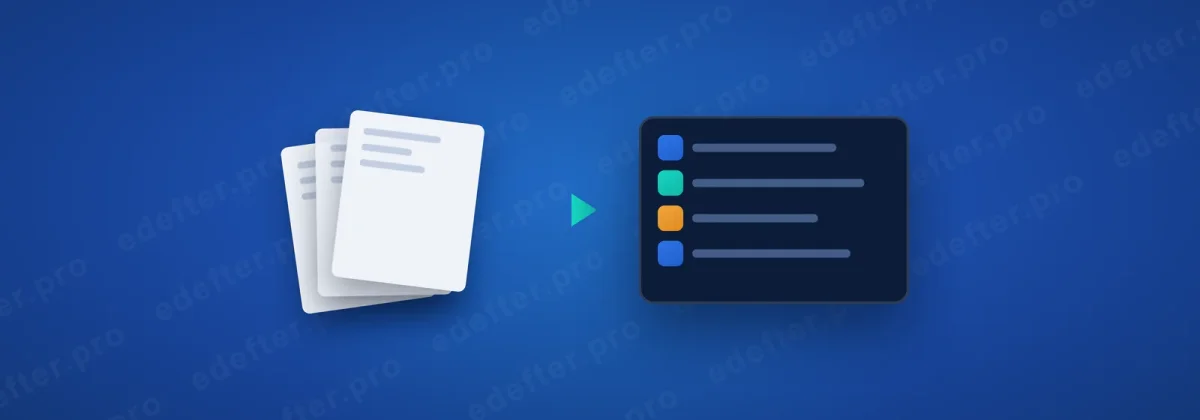
Paperless accounting is the running of accounting processes with electronic documents and ledgers instead of paper. It has two sides: on the document side, e-documents like e-Invoice, e-Archive Invoice, e-Waybill and e-Self-Employment Receipt; on the ledger side, the e-Ledger. When these components come together, the whole flow from invoice to ledger runs electronically. The aim is to move faster, cut cost, reduce errors and ease compliance with the rules.
Author: e-Defter PRO Content Team. The field team that walks with businesses through the paperless shift on the ledger side.
A business owner showed us his archive room last year: folders to the ceiling. "I have to keep these, but there is no room left," he said.
It was not paper he needed to keep. It was the data.
Once he moved his processes to electronic, that room emptied and the documents became reachable with one click. This article explains what paperless accounting is, which components make it up and where e-Ledger stands in the picture. You can find e-Ledger itself in depth in our what is e-Ledger guide.
What You Need to Know
- Paperless accounting is the electronic running of processes with e-documents and e-ledgers.
- On the document side there are e-documents like e-Invoice, e-Archive and e-Waybill; on the ledger side there is the e-Ledger.
- e-Ledger is the ledger layer of paperless accounting; it turns documents into a legal ledger.
- Benefits: speed, low cost, easy archive, fewer errors and compliance with the rules.
- The record is already electronic in most businesses; the real paperless step e-Ledger brings is moving the printed, notary-certified legal ledger to a berat.
What is paperless accounting?
Paperless accounting, as the name says, is the running of accounting work in an electronic medium without printing to paper. Instead of an invoice being printed and filed, it is produced and kept as an electronic document. In the same way, ledgers are kept as electronic files rather than paper volumes.
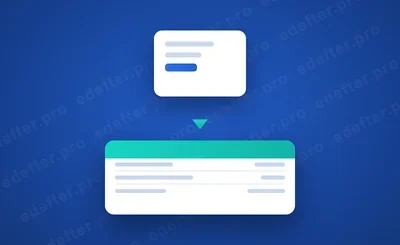
The core idea here is that the document and the record stay digital from start to finish. The invoice is born electronic, turns into an accounting entry electronically, is posted to the ledger electronically and is kept electronically. No printing. At no link of the chain do you need to drop to paper.
This shift is a choice. It is also, more and more, an obligation. For businesses that pass certain thresholds, e-document and e-Ledger applications become mandatory in stages.
The components of paperless accounting
Paperless accounting is made not of a single product but of a family of components. It clears things up to think of these in two groups: the document side and the ledger side.
On the document side sit the e-documents. e-Invoice and e-Archive Invoice document sales, e-Waybill documents shipment, and the e-Self-Employment Receipt documents self-employment income. Each one replaces a paper form. On the ledger side stands the e-Ledger; it keeps the journal and general ledger in an electronic and legal form. That is the other half.
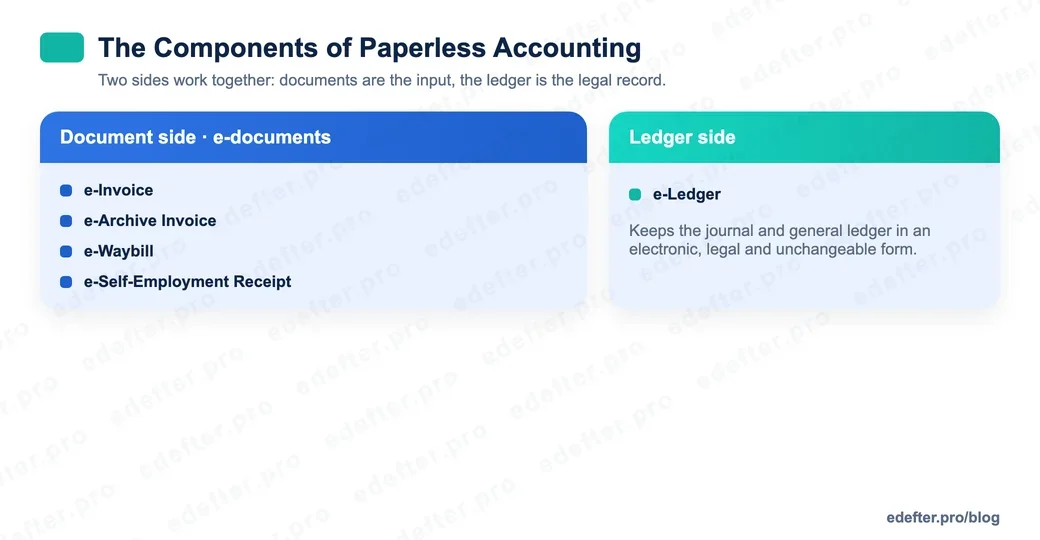
These components complete each other. The document side records the transactions, the ledger side turns those records into a legal ledger. Which component is mandatory or useful for you depends on your activity and your scale.
Where does e-Ledger sit in paperless accounting?
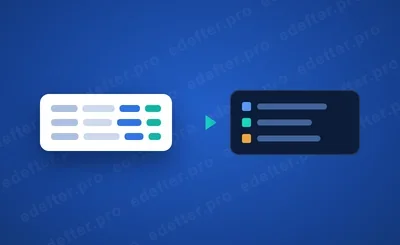
e-Ledger is the ledger layer of paperless accounting. While the e-Invoice and other e-documents on the document side record single transactions, the e-Ledger pours the whole of these transactions into the journal and general ledger. So e-documents are the input, and the e-Ledger is the legal record of that input.
This split blurs often. Cutting e-Invoices is a part of paperless accounting. But not the whole. The ledger side is a separate obligation, and it is the part businesses most often forget when they think going digital on invoices is enough. We covered this layer difference between e-Invoice and e-Ledger in our e-Invoice vs e-Ledger article.
The real meaning of paperless on the ledger side shows here too. Before e-Ledger, records were already kept electronically in an accounting program in most businesses; what stayed tied to paper was the journal and general ledger being printed and certified by a notary. The opening and closing certification needed a physical, bound, stamped ledger. e-Ledger removes this printed, notary-certified ledger; the berat uploaded to GİB takes the place of the notary certification. In short, paperless on the ledger side is not making the record electronic. It is freeing the legal ledger from paper and the notary.
So to complete the paperless accounting picture you need to think of both the document side and the ledger side. Without one, the other leaves the picture half done.
The benefits of paperless accounting
The benefits of moving to paperless accounting are concrete, and the archive room at the start of this article is their most visible example. We can gather the benefits under four headings.
The first is speed. An electronic document is produced and sent at once; no waiting for post or hand delivery. The second is cost. Paper, printing, shipping and physical archive expenses fall away. The third is access; instead of hunting a document among folders, you find it in seconds. One search. The fourth is accuracy; the electronic flow reduces errors from manual copying and re-entry.
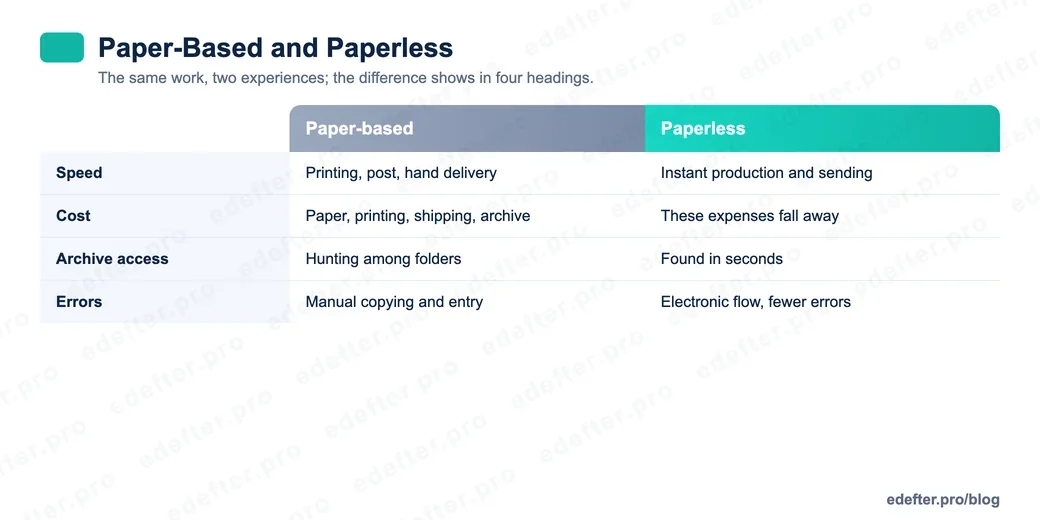
On top of these benefits comes compliance. Because the rules lean more and more toward electronic, going paperless also means keeping up with current obligations.
How do you start paperless accounting?
In fact, most businesses took the first step of this road long ago. Records are no longer kept in paper ledgers but in an accounting program on a computer. So the recording side of paperless is already settled in many businesses. The step that remains, and that becomes mandatory in stages, is adding the official layers on top of this electronic base: e-Invoice and other e-documents on the document side, the e-Ledger on the ledger side.
So the shift is often not starting from zero. It is formalizing the electronic order you already have. The order depends on your activity and on which application becomes mandatory when; usually the mandatory e-document comes first, then the e-Ledger. Two questions guide you. Which components are mandatory for me? And which software can run these together with the program I already use? We gathered the criteria for choosing the right software on the ledger side in our how to choose e-Ledger software article. At e-Defter PRO we take on the ledger layer of this picture, turning your documents into a legal ledger and a berat.
In Short
Paperless accounting is moving the whole flow, from invoice to ledger, to electronic. Think of the document side and the ledger side together; without one, the picture stays half done. To empty your archive room and speed up your processes, we stand with you on the ledger side. If you want to clear up your road map, talk to our expert team.